Want Us To Contact You?
Blog
In-Person vs Virtual Childcare Training: How Centers Can Choose the Right Format
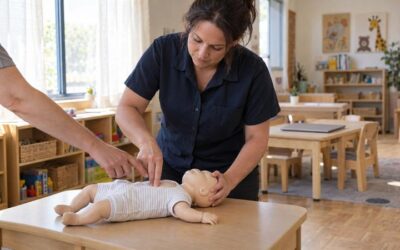
Choosing between virtual and in-person childcare training starts with the goal. If staff need to understand policy, review expectations, or complete training across shifts, virtual can be a practical fit. If staff need to see a skill demonstrated, practice it, or talk through examples together, in-person may support follow-through better.
We offer virtual and in-person training options for childcare professionals. Our classes include safe sleep, CPR and first aid, and lesson planning topics. Before registering, ask what staff need to do after the session. That helps match the format to the topic, schedule, and team.
A common sign that the format may not fit is staff completing training, but routines not changing, or directors needing to reteach the same points. In that case, the delivery choice may need a closer look.
Read the full article for a simple way to choose virtual, in-person, or a mixed plan for your center.

School-Age Care Program Planning: Routines, Environment, and Daily Structure
School-age care program planning is about structure, not just filling time. Clear routines, room setup, and predictable flow help children settle in and move through the afternoon with less stress.
A strong plan covers arrival, snack, homework, play, cleanup, and pickup. It also gives children a few age-appropriate choices inside a clear framework. Mixing quiet and active options can help groups with different ages and energy levels.
The room matters too. Defined spaces for focus, games, creative work, and movement can reduce crowding, waiting, and constant redirection. For childcare professionals, these supports can make supervision and daily management more predictable.
Read more for practical ideas for planning your school-age program.

How Childcare Centers Can Track Training Completion and Renewal Dates
Childcare training record keeping usually breaks down when completions, certificates, and renewal dates are tracked in different places. A simpler system starts with one master tracker that shows who has completed what, when renewals are due, and where certificates are stored.
Keep completion dates separate from renewal dates so staff files do not look complete when follow-up is still needed. Use one consistent storage method for certificates, whether paper, digital, or both, and add reminder intervals before deadlines.
A regular monthly review helps catch missing proof, pending registrations, and upcoming expirations before they create scheduling pressure. For childcare teachers, center managers, and school age care providers, a clear tracker supports staffing decisions and smoother administrative support. We support childcare programs with practical systems for training records and ongoing follow-up. Read more to build a clearer process before the next renewal cycle.
New Childcare Teacher Onboarding: A Practical First-Month Guide
New childcare teacher onboarding works best when the first month is built around safety, supervision, routines, and steady skill-building. A strong start gives new teachers clear expectations before they are expected to lead full parts of the day. For childcare professionals, orientation is only the first step. Real classroom readiness comes from watching routines, handling transitions, and learning center procedures over the first week and beyond.
New teachers do better when they take on one routine at a time. This can include arrival, meals, cleanup, nap support, or circle prep before managing many parts of the day. Early support also helps with documentation, communication, supervision points, and behavior guidance. If confusion keeps repeating in the same areas, targeted training or center-level structure is usually needed.
We help early childhood professionals connect onboarding to daily classroom practice through practical trainings, lesson planning support, and safety-focused courses. Read the full guide for a first-month checklist.

How to Build a Childcare Training Calendar That Stays Current
A childcare training calendar works best as a live administrative tool, not a one-time plan. For childcare professionals and center owners, it should show required training, renewal windows, onboarding needs, registration dates, and documentation follow-up in one place.
A few practical takeaways matter most. Build the calendar around staff roles instead of just class dates, so new hires, lead teachers, and administrators each have the right training timed correctly. Add review dates and a renewal window for required trainings so deadlines do not compete with classroom coverage.
If your calendar depends on memory or last-minute reminders, it may need tighter coordination. Read more about building and maintaining a childcare training calendar.
Local Early Childhood and Emergency Training Guide for Cumberland, NC Teams
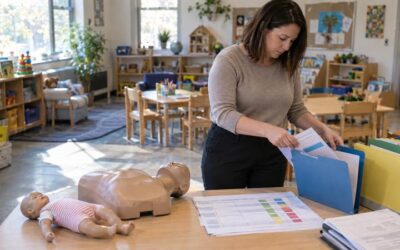
Choosing the right childcare training for your Cumberland, NC team starts before you look at class dates. A single course may not cover professional development, CPR and first aid needs, and BLS requirements for every team member.
We recommend matching each course to the staff role and the requirement it must meet. Early childhood professional development supports daily care and classroom practices. CPR and first aid address emergency response skills. BLS is a separate credential when a role or employer requires it. A completion certificate alone does not confirm that a training requirement is met.
Build one staff plan with role, age group served, current training, due dates, and completion records. Group staff only when the course fits each person. This keeps renewals visible and prevents the wrong course from being booked first.
Read the full guide to prepare your team’s training plan.

How to Choose Early Childhood Lesson Planning Support: Coaching, Workshops, and Ready-to-Use Plans
When choosing early childhood lesson planning support, the first step is naming the gap. Are you missing a usable plan, unsure whether your plan will fit the room, or looking for consistency across rooms? Each need points to a different format.
Ready-to-use plans give you a starting structure with activities, materials, and age-group alignment. Coaching helps you refine planning decisions over time. Workshops align a team around one planning structure and shared language.
The right fit depends on your time, staffing, ratio, transitions, and documentation expectations. A plan that does not fit the daily room can take more time to change than to build. We help early childhood professionals in Cumberland match the format to the real workload first, then add the next layer later.
Read the article to find the planning support that fits your classroom.

How Childcare Center Owners Can Build a Professional Development Plan for Their Team
A childcare staff professional development plan keeps training connected to what your center actually needs. It moves beyond tracking certificates and helps you organize role-specific goals, realistic scheduling, and follow-up in the classroom.
Start with a training needs assessment. Look at classroom observations, repeated concerns, staff roles, and center priorities. Assign training in a manageable order: safety and supervision first, then foundation topics, then role-specific development and long-term growth.
Set focused goals tied to daily practice. After training, choose one small follow-up step the staff member can apply, then observe or check in. Review the plan regularly as staffing and center needs change.
Want to build a practical development plan for your team? Read the full article for the step-by-step process.

Which CPR Class Do I Need? A Guide for Childcare Providers, Workplaces, Healthcare Teams, and Families
Choosing the right CPR class starts with your role, not the course title. Childcare providers, workplace teams, healthcare staff, and families all have different training needs. A class labeled CPR does not always include First Aid, AED instruction, or child and infant skills.
Before you register, confirm what your employer, center, or program requires. Ask if you need First Aid and AED training. Ask whether adult, child, and infant CPR skills are included. Check if hands-on practice is required. And use the exact course name when one is listed.
Heartsaver CPR, AED, and First Aid is common for workplace and community responders. BLS is the course to choose when a healthcare role names it. Childcare staff should look for training that fits their center and state requirements, including DCDEE-approved options where relevant.
Read the full guide to find the class that matches your responsibility.

Childcare Center Administrative Support: Tasks Owners and Directors Can Delegate
Childcare directors and owners have a lot on their plates. Routine tasks like attendance tracking, file organization, and training documentation can pull focus from staff, families, and daily oversight. Administrative support helps with that repeatable work while leadership keeps decisions and approvals.
The best tasks to delegate are frequent, process-driven ones. Start with work that interrupts your day most, like follow-up on missing records or training reminders. Document the workflow first with checklists, deadlines, and review points so the handoff stays clear.
Support can organize, prepare, and track, but leadership remains responsible for policies, final approvals, and decisions. That clear split keeps accountability where it belongs.
Read the full article for practical guidance on what to delegate.
Looking for a reliable company to support your career growth in early childhood education?
Look no further than At Ease Business Solutions! Our exceptional services and commitment to helping you achieve your professional goals make us the top choice. Don't hesitate, get in touch with us today!